
At 8 AM on May 3, midway up Island Peak’s 70° ice wall, I found myself jumaring horizontally - stomach pressed to the slope - while a team of Russian climbers watched in amused disbelief. Exhausted after eight hours of climbing Island Peak, including a nerve-wracking crawl over a crevasse-spanning ladder, I was in no state to argue when they shouted, “Davai! Stand or fall!”
History of an Iconic Himalayan Summit: Island Peak
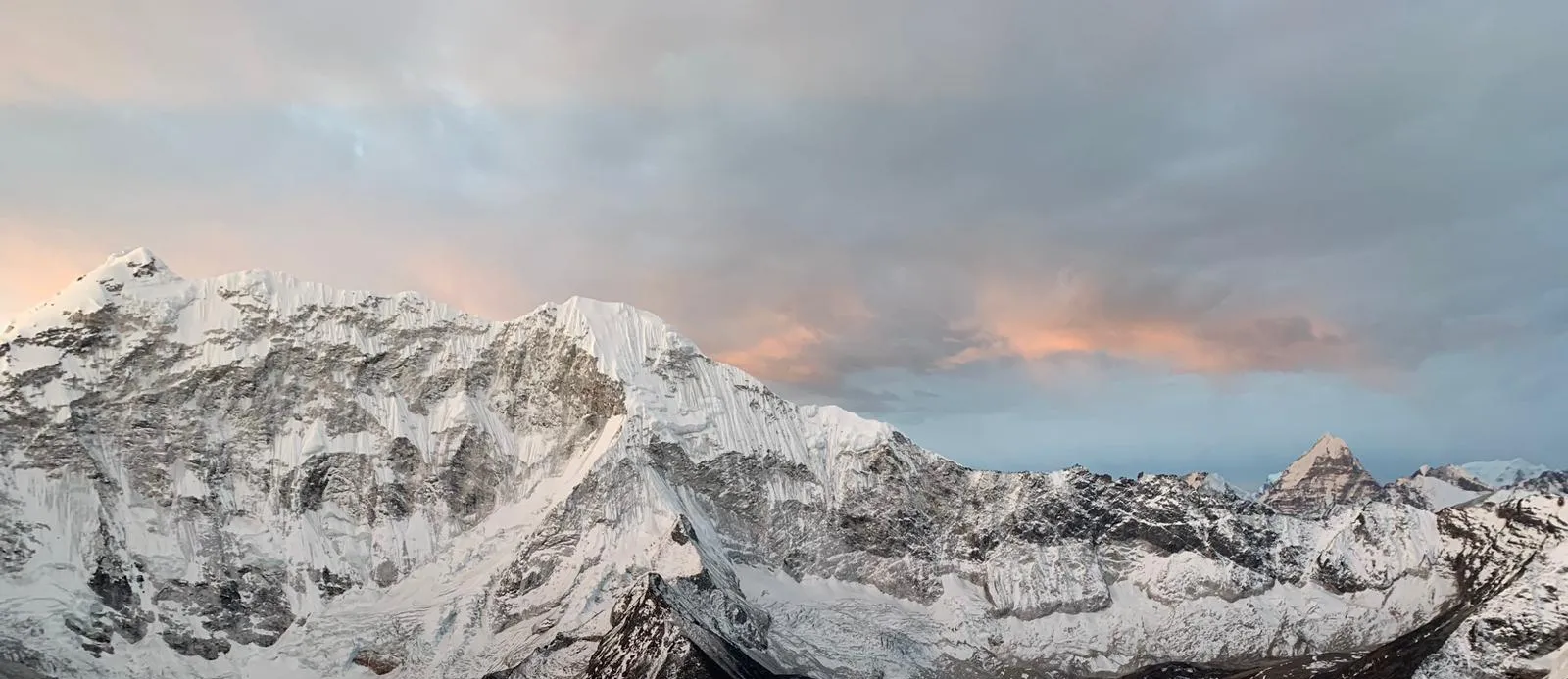
The 6,189-meter Island Peak (locally Imja Tse) earned its name in 1953 from British Everest Expedition members who marveled at its “isolated” appearance amidst a sea of giants like Lhotse and Everest. Officially renamed in 1983, it remains a bucket-list climb for aspiring mountaineers seeking crevasses, ice walls, and 360° Himalayan vistas.

Climbing Island Peak : From Darkness to Summit to Survival
- Preparing for Climbing Island Peak
Our team of four - Varun, Jahnavi, Jasmine, and I - split from the Everest Base Camp group on April 30, lured by Island Peak’s challenges. But the cozy teahouse stays in Chukkung and a decision to avoid Base Camp’s harsh conditions cost us critical jumaring practice - a mistake that haunted me on the headwall.
- Midnight Start: The First Phase of Climbing Island Peak
We left Base Camp at midnight on May 3, scrambling over rocky trails in darkness. By 2:30 AM, we’d passed High Camp at 5600m at around 2.30 am and reached crampon point at 4:30 AM, just as dawn lit the snow-draped slopes ahead.
- Climbing Island Peak’s Crevasses: Ladders, Leaps, and Luck
The first hour in crampons tested nerves: four rickety ladders bridged bottomless gaps, while two crevasses required standing jumps. Focused on crampon placement, I ignored the exposure - until the descent revealed a cracked ice bridge, a stark reminder of the mountain’s dangers.

- The Headwall: Climbing Island Peak’s Crux
By 6 AM, we reached the glacial bowl beneath the infamous 220-meter ice wall. With slopes ranging from 50° to 70°, the “new route” demanded three hours of grueling jumaring. Unlike training videos, this ascent left no room for error - just sheer grit and a Russian climber’s timely advice: “Davai! Stand or fall!”
- Summiting Island Peak: 360° of Himalayan Majesty
At 9:15 AM, I made it to the top of the ridge and then quickly onto the summit. In a precariously small peak area,, I sat alone for 30 minutes, absorbing views of Lhotse’s south face, Amphu Lapcha’s ridges, and the cloud-smothered Makalu. Climbing Island Peak had promised glory - and delivered.
- The Descent: Slow Climbing Island Peak’s Legacy
The return to Base Camp was comparatively easy and I made it back to the bowl at the bottom of the ice wall by 11.15. Exhaustion forced a 30-minute break before the final trudge to Base Camp which I reached at 4 pm. Cyclone Fani’s arrival later stranded us in Dingboche, where bridge games and Café 4401’s hot chocolate salvaged the wait.

Key Takeaways from Climbing Island Peak
- Train for Technical Sections: Jumaring skills are non-negotiable.
- Respect the Mountain: Crevasses and weather shifts demand humility.
- Embrace the Journey: Even flawed climbs (belly-crawls included) forge unforgettable stories.
Ready to carve your own epic story in the Himalayas? Explore more adventures and expert-guided climbs with Juniper.